Steel, Smoke, and Suds: How Itabashi's Gritty Post-War Past Built a Blueprint for Craft Beer Revival
There's a certain kind of neighborhood that never makes the travel guides. No cherry blossom viewing spots. No Michelin stars. Just people, work, and a quiet, stubborn dignity that outlasts every economic downturn thrown its way. Itabashi is that neighborhood. And somehow — maybe not so surprisingly, once you know the history — it became one of the most interesting places in Japan to drink a beer.
To understand why Itabashi's craft beer culture feels different from what you'll find in Tokyo's trendier wards, you have to go back to the rubble.
Rebuilding on Factory Floors
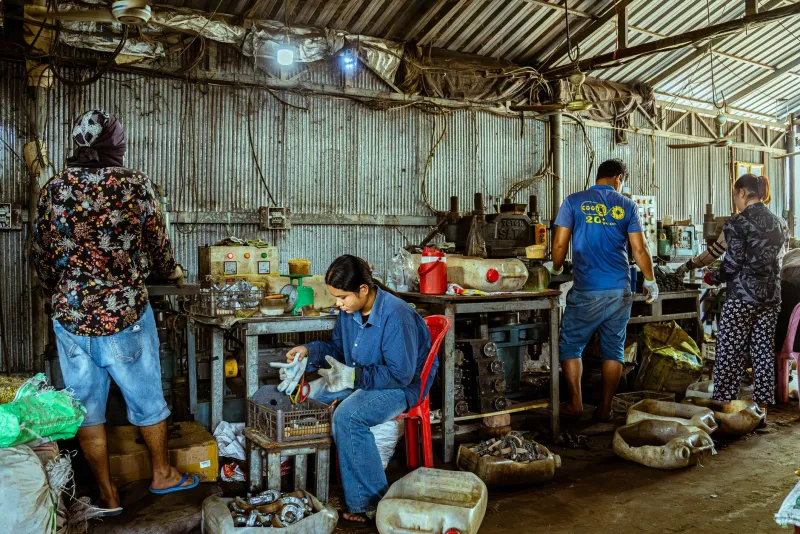
After World War II, Itabashi was among the Tokyo districts tasked with getting Japan's economy moving again — fast. The ward had long housed small manufacturers, metalworkers, and chemical plants. In the post-war years, that industrial identity deepened. Factories hummed. Workers streamed in. Itabashi became a place where people made things with their hands and took genuine pride in the doing of it.
That ethos — craft for craft's sake, quality as a matter of personal honor — didn't disappear when some of those factories eventually shuttered. It got absorbed into the neighborhood's DNA. When Japan's craft beer revolution started picking up steam in the late 1990s and accelerating through the 2000s, Itabashi wasn't starting from zero. It already knew how to build something from scratch and make it last.
Compare that to neighborhoods that came to craft beer through pure trendiness. The difference shows up in the glass. When brewing is rooted in a community's actual values rather than imported as an aesthetic, you get beers that taste like somewhere specific — not just somewhere cool.
Community as Ingredient
One thing that strikes visitors to Itabashi's local taprooms and small-batch operations is how unpretentious the whole scene is. You're not expected to have opinions about dry-hopping rates or to know the difference between a West Coast and New England IPA before you're welcome at the bar. The regulars are factory workers, shopkeepers, retired craftsmen. The conversation is easy. The beer is serious, but nobody makes you feel bad for enjoying it without a lecture.
This matters more than it sounds. In a lot of American cities, craft beer culture developed a reputation for being exclusionary — a hobby for a certain demographic, priced and positioned accordingly. Itabashi's version evolved differently, shaped by the ward's blue-collar character. The community didn't graft craft brewing onto itself as an upgrade. It grew brewing out of the same values that had always defined the place: hard work, genuine skill, and a distrust of anything too flashy to be real.
The result is a brewing culture that's unusually durable. Trends come and go. A scene built on community stays.
What American Neighborhoods Can Borrow
Look at any mid-size American city right now and you'll find at least one formerly industrial neighborhood that's either mid-gentrification or wondering if it's next. Pittsburgh's Lawrenceville. Detroit's Corktown. Cleveland's Tremont. These places have histories not entirely unlike Itabashi's — working-class roots, manufacturing pasts, periods of economic hardship, and genuine community resilience.
Some of them have developed craft beer scenes. But the ones that feel most authentic are usually the ones that grew their brewing culture from the inside out, rather than importing it as a signal of neighborhood transformation. A taproom that hires locally, sources locally, and prices its pints so the people who've always lived there can actually afford to drink them is doing something fundamentally different from a taproom that uses exposed brick and vintage factory imagery as decor while the original residents get priced out.
Itabashi's model — and it's less a conscious strategy than a natural outgrowth of the place's character — is essentially this: let the neighborhood's actual identity drive the brewing culture, not the other way around. The beer should taste like where it comes from, and where it comes from should still be recognizable to the people who built it.
The Science of Place
There's a brewing science angle here that's worth taking seriously. Terroir is a concept most people associate with wine, but it applies to beer in ways that go beyond the obvious (water chemistry, local grain). The environment in which a brewery develops — the expectations of its earliest drinkers, the economic constraints that shape recipe decisions, the cultural values that determine what "good" means — all of that leaves a mark on the beer.
Itabashi's brewers didn't have the luxury of chasing every new hop variety or expensive specialty malt when they were starting out. Budget constraints pushed creativity. The need to satisfy a working-class palate — people who wanted something flavorful but not alienating, satisfying but not precious — shaped recipe development in ways that, ironically, produced some remarkably balanced, approachable beers. Necessity turned out to be an excellent brewing consultant.
American craft brewers operating in similar economic and community contexts might find the same thing. The constraints of brewing for a specific, real community rather than an abstract ideal customer tend to produce more interesting beer, not less.
Resilience as a Recipe
What Itabashi's post-war story ultimately offers isn't a romanticized vision of poverty or hardship. It's something more practical: a demonstration that authentic craft culture is most likely to flourish where people already value making things well and where community ties are strong enough to sustain something through the inevitable rough patches.
Craft brewing is hard. Margins are thin. Competition is fierce. The breweries that survive long enough to become genuinely beloved institutions tend to be the ones with deep roots in a real place and a real community — not the ones that opened with the best Instagram aesthetic and the most ambitious tap list.
Itabashi survived a war, an economic miracle that left working-class neighborhoods behind, multiple recessions, and the relentless pull of Tokyo's trendier real estate market. Its brewing culture carries that survival instinct. Every pint poured in one of the ward's small taprooms is, in some quiet way, a continuation of the same stubbornness that kept the neighborhood going when it would have been easier to give up.
That's a spirit worth brewing in. And if you're running a craft operation in a neighborhood that the glossy magazines haven't discovered yet, it might just be the most important ingredient you have.