Brewed for the Block: How a Tokyo Working-Class Ward Shapes Everything We Put in the Glass
There's a certain kind of neighborhood that doesn't make it onto travel blogs. No famous shrines. No Michelin-starred omakase. No perfectly curated Instagram backdrops. Itabashi Ward, tucked into the northern edge of Tokyo, is exactly that kind of place — and honestly, we wouldn't have it any other way.
Itabashi is a ward built by people who showed up, clocked in, and made things. Factories, small workshops, printing presses, machine shops — this is a district that spent decades producing goods the rest of Tokyo quietly relied on. It's not glamorous. It was never supposed to be. And that legacy of practical, no-nonsense craftsmanship is the single biggest influence on how we think about brewing beer.
What "Working-Class" Actually Means in a Brewing Context
When people talk about craft beer in America, the conversation often drifts toward the aspirational. Limited releases. Barrel programs. Hazy IPAs with names that sound like they belong on a gallery wall. There's nothing wrong with any of that — but it's not where we come from.
Itabashi's post-war identity was shaped by scarcity and ingenuity. After 1945, the ward rebuilt itself not through luxury but through resourcefulness. Workshops adapted. Craftspeople figured out how to do more with less. Innovation wasn't a buzzword — it was survival. That mindset translated into a deep respect for process, for material honesty, and for the idea that good work doesn't need to announce itself.
We think about brewing the same way. A well-made lager that a machinist can crack open after a long shift is just as worthy of our attention as a complex farmhouse ale. Actually, it might be more worthy, because it's harder to hide behind. A clean, honest beer with nowhere to hide demands real technical skill.
The Discipline of Constraints
One of the things that makes Itabashi's industrial heritage so compelling is how consistently its craftspeople innovated within constraints rather than around them. Limited floor space. Tight material budgets. Demanding production timelines. These weren't obstacles to creativity — they were the conditions that produced it.
We've borrowed that framework wholesale. Our recipes don't start with "what's the most exotic ingredient we can source?" They start with "what's the best beer we can make with what's actually available, and how do we execute it flawlessly?" That might mean working with a domestic two-row malt instead of importing a specialty grain. It might mean dialing in our water chemistry — something we've written about before — rather than masking it with adjuncts. The constraint becomes the craft.
This also informs how we approach scaling. A lot of craft breweries treat small-batch production as inherently superior. We don't buy that entirely. Brewing a consistent, high-quality product at volume is its own discipline, and it's one that working-class production culture understands deeply. Consistency isn't the enemy of artistry. It's often the proof of it.
Community Over Clout
Itabashi Ward has always been a neighborhood where people actually live. Not a destination, not a scene — a community. Families, longtime residents, the kind of local izakayas where the owner knows your usual order. That social fabric, where the bar or the brewery is a genuine gathering place rather than a lifestyle brand, is something we actively try to recreate on this side of the Pacific.
In practical terms, that means we think hard about price accessibility. Craft beer in the US has developed a bit of an image problem — the sense that it's a hobby for people with disposable income and strong opinions about dry-hopping. We get why that happened, and we don't judge it, but it's not the culture we want to build. The whole point of a neighborhood brewery is that the neighborhood can actually afford to drink there.
It also means we're skeptical of gatekeeping. You don't need to know the difference between a Kölsch and a cream ale to deserve a good beer. You just need to want one. Itabashi's working-class ethos never had much patience for hierarchies of taste, and neither do we.
Sourcing with Intention, Not Pretension
The ward's manufacturing culture also influences how we think about ingredients and supply chains. Itabashi's small-batch producers historically built tight relationships with their suppliers — not because it was fashionable, but because reliability was everything. You needed to know your materials would show up, perform consistently, and come from people you could actually call.
We've tried to replicate that approach. Our hop sourcing leans toward established relationships with growers in the Pacific Northwest — people we've talked to, whose farms we understand, whose product we can predict. Same with our malt suppliers. This isn't about slapping "locally sourced" on a tap handle for marketing purposes. It's about building the kind of supply chain trust that lets you brew the same beer twice and have it taste the same both times.
When we do reach for something unusual — a specific Japanese ingredient, a regional grain variety — it's because it genuinely serves the beer, not because it makes for a more interesting story on the label.
The Honest Pint
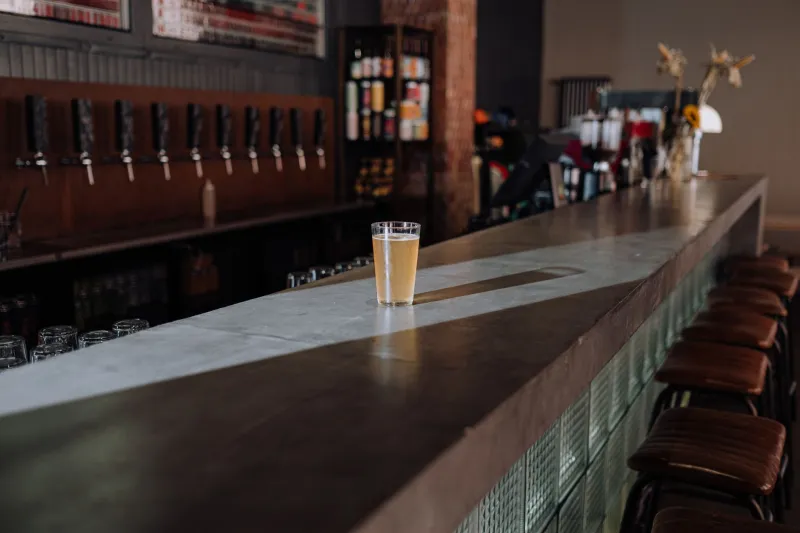
There's a phrase that keeps coming back to us when we talk about what Itabashi Brewing Co. is actually trying to do: the honest pint. Not honest as in simple or dumbed-down. Honest as in transparent about what it is, made with real skill, priced fairly, and brewed for the person drinking it rather than for the person reviewing it.
That's Itabashi Ward in a glass. A place that never needed to perform its identity because it was too busy living it. A community that built real things for real people and took quiet pride in doing the work well.
We're just trying to do the same thing — one batch at a time.