What's Actually in Your Pint: The Hidden Role of Water in Every Beer We Brew
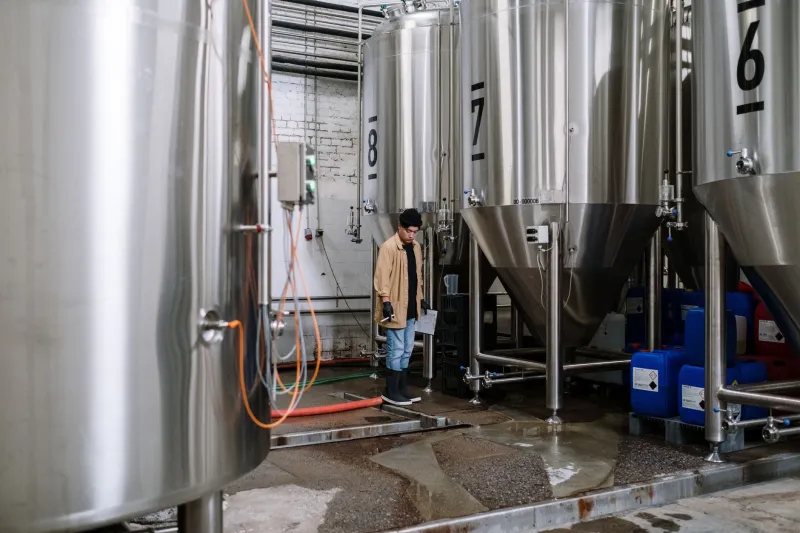
Ask someone what makes a great craft beer and you'll hear the usual suspects: a killer hop bill, the right grain blend, maybe a house yeast strain that took years to develop. Rarely does anyone lead with water. But pull back the curtain on any serious brewing operation — from a Portland taproom to a centuries-old sake brewery in Niigata — and water is almost always the first conversation.
At Itabashi Brewing Co., water isn't an afterthought. It's the foundation. And the water traditions tied to our home in Itabashi, Japan have shaped our brewing philosophy in ways we're genuinely excited to unpack for you.
Why Water Chemistry Is the Quiet MVP of Brewing
Beer is roughly 90 to 95 percent water. That number alone should stop you in your tracks. When you're talking about a 16-ounce pint, you're drinking somewhere around 14 ounces of straight-up H2O — just dressed up with grain sugars, hop bitterness, and fermentation magic. So when that water carries its own mineral fingerprint, it leaves a mark.
The key players in brewing water chemistry are minerals like calcium, magnesium, sulfate, chloride, sodium, and bicarbonate. Each one nudges the brewing process in a different direction. Calcium helps enzymes work more efficiently during the mash and promotes yeast health during fermentation. Sulfate accentuates hop bitterness, giving an IPA that crisp, dry snap. Chloride, on the other hand, rounds things out — it brings a softness and fullness that makes malt-forward beers feel lush and satisfying on the palate.
Brewers call this the water's "mineral profile," and in the craft beer world, dialing it in for a specific style is considered an art form.
Itabashi's Water: Soft, Clean, and Surprisingly Complex
Itabashi Ward sits in the northern part of Tokyo, and while it might not have the international name recognition of Kyoto or Sapporo, its water tells a fascinating story. The region draws from groundwater sources influenced by the Kanto Plain's geological layers — a slow filtration process through volcanic rock and alluvial sediment that produces water with notably low mineral hardness.
In brewing terms, this is what's called "soft water." And soft water has a long, celebrated history in Japanese beverage culture. The famous sake breweries of Nada and Fushimi have long debated the virtues of hard versus soft water — Nada's harder "Miyamizu" water producing robust, bold sakes, while Fushimi's softer water yields something gentler and more delicate. Itabashi's water leans toward that softer tradition.
For beer, soft water is a dream canvas for certain styles. It doesn't impose. It lets the malt speak. It allows subtle hop aromatics to come through without getting muscled out by aggressive mineral sharpness. When we're brewing a Japanese-style lager or a clean, approachable pale ale, that soft water profile is doing serious heavy lifting in the background.
How Japanese Water Traditions Differ From American Craft Brewing Norms
Here in the US, craft brewing culture grew up largely in regions with harder water — think Burton-on-Trent's legendary sulfate-heavy wells that made English IPAs famous, or the mineral-rich water profiles that helped define West Coast IPAs as aggressively bitter and dry. American brewers got very comfortable "Burtonizing" their water, meaning they'd add mineral salts to push bitterness and accentuate hop character.
Japanese brewing tradition took a different road. The emphasis on subtlety, balance, and what the Japanese call ma — the beauty of negative space — shows up in brewing philosophy too. Rather than amplifying one characteristic to the extreme, the goal is harmony. A beer where no single element dominates. Where the finish is clean and the next sip comes naturally.
That doesn't mean Japanese-inspired brewing is timid. It means it's intentional. At Itabashi Brewing Co., we respect that lineage while still making beers that are undeniably American in their ambition and variety. We'll brew a hazy IPA that's lush and tropical, and we'll use our soft water profile to let those juicy hop oils shine without harsh bitterness cutting them short. We'll brew a dark Munich-style lager and let the water's low sulfate content keep the roast smooth and the finish lingering.
Water Terroir: A Concept Worth Borrowing From Wine
The wine world has been talking about terroir — the idea that a place's soil, climate, and geography leave an irreproducible imprint on what's grown there — for centuries. Beer is starting to have that same conversation, and water is central to it.
When you drink a beer brewed with Itabashi-inspired water, you're tasting a geography. You're tasting the slow percolation of rainwater through Kanto sediment, the mineral patience of a place that values craft and restraint. That's not marketing language — it's chemistry with a sense of place.
Some American craft breweries are now going out of their way to source local spring water, publish their water reports alongside their beer specs, and even host "water tastings" to educate drinkers on how the same recipe brewed with different water profiles produces genuinely different beers. We love this trend. It's the kind of nerdy transparency that makes craft beer culture so rewarding.
What This Means for What's in Your Glass
Next time you crack open one of our beers, here's a fun thing to try: before you even smell the hops or think about the malt, just take a small, clean sip and hold it for a second. Notice whether it feels sharp or soft. Notice if the finish is quick and dry or slow and round. That sensation — before the flavor even fully registers — is water doing its job.
At Itabashi Brewing Co., we profile every batch of water before it hits the brew kettle. We adjust mineral additions thoughtfully, always with an eye toward the style we're building and the experience we want you to have. It's painstaking work that most drinkers will never notice — and honestly, that's exactly how it should be. The best brewing science is invisible. It just makes the beer taste right.
Water is where every great beer begins. In Itabashi, it's where our story begins too.